

(This post first appeared on SQLperformance.com four years ago as part of a blog series, before that website was mothballed later in 2022 and the series was curtailed. Reposted here with permission, with a few tweaks.)
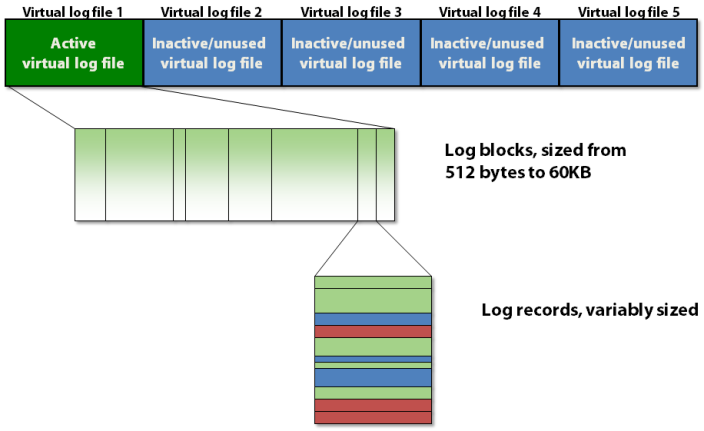
In the first part of this series I introduced basic terminology around logging so I recommend you read that before continuing with this post. Everything else I’ll cover in the series requires knowing some of the architecture of the transaction log, so that’s what I’m going to discuss this time. Even if you’re not going to follow the series, some of the concepts I’m